Chittagong, BANGLADESH – Two years ago, Bangladesh underwent an unprecedented political revolution, which saw the end of former Prime Minister Sheikh Hasina’s 15-year autocratic reign.
After Hasina fled the country for political asylum in India, Bangladesh formed an interim government. A court ordered her sentenced to death for using lethal weapons on protesters while she was in office.
The revolution was supposed to herald a better and more democratic future for Bangladesh. Two years have passed since then, and a question arises: Has the country really changed?
Listen to the author read this article:
Since 2024, Bangladesh has been on a political rollercoaster. Hasina’s rule came to a crashing halt with a student uprising, followed by an interim government led by Nobel laureate Muhammad Yunus.
The former opposition party, the Bangladesh Nationalist Party, returned to power with the February 2026 election of Prime Minister Tarique Rahman, who spent 17 years living in exile in London before Hasina left.
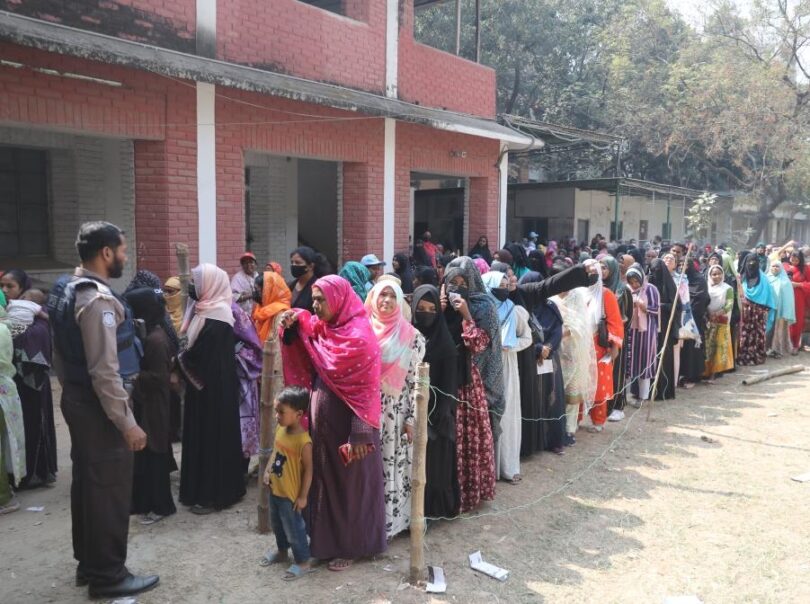
In contrast to the previous three elections while Hasina was in power, the election this year saw voters come out for a far more competitive race.
But has Bangladesh truly seen a political transition, or has it only swapped one ruling party for another?
The revolution led to the expansion of political opposition and the implementation of institutional reforms. Opposition parties gained significant parliamentary representation in 2026, with a coalition led by the religious party Jammat E Islami securing 68 out of 300 available seats. The coalition includes the National Citizens Party, formed by organizers of the 2024 protests.
The July Charter, which is a list of constitutional amendments approved by voters during the parliamentary election this year, proposed judicial independence, prime-ministerial term limits, and a bi-cameral Parliament, although several constitutional changes are yet to be fully implemented.

Economically, Bangladesh is in trouble, with a low growth rate, high inflation and one in five people living below the poverty level.
Despite having a slight increase in exports, reserves and remittances – money sent home by Bangladeshi citizens working abroad – the investment, employment and banking sectors remain a big problem.
The revolution did not deliver the change it was supposed to bring to Bangladesh’s economy. Politically active citizens do not bring much benefit to their economy if they cannot afford basic living standards.

Undoubtedly, Bangladesh is more politically open today than yesterday. The revolution will bring a culture of freedom of speech, freedom of the press and criticism of the government.
But openness does not mean freedom. The continued suppression of journalists, attacks on minorities and mob violence, as well as religious extremism, indicate weaknesses in law enforcement.
The most important test of the revolution may be whether Bangladeshis can tolerate dissent, however unpleasant it may be.
The country’s foreign policy is also undergoing changes as relations with neighboring India soured after India provided refuge for the condemned prime minister.
The Indian government has continued to refuse Bangladesh’s extradition requests.
On the other hand, Bangladesh has strengthened its relations with the U.S., China, Pakistan and other countries as it seeks to diversify its ties and hedge against any one country’s influence on its sovereignty.
So, has Bangladesh really evolved? Change is happening, but it is not uniform. Freedom of speech is increasing, as well as the criticism of the government, but the law-and-order situation remains problematic with continued mob violence and extremism.
Despite the daily struggles, though, many Bangladeshis still believe that the political change sparked in 2024 is leading the country towards stability and democracy.
Bitto Ghosh is a Junior Reporter with Youth Journalism International.