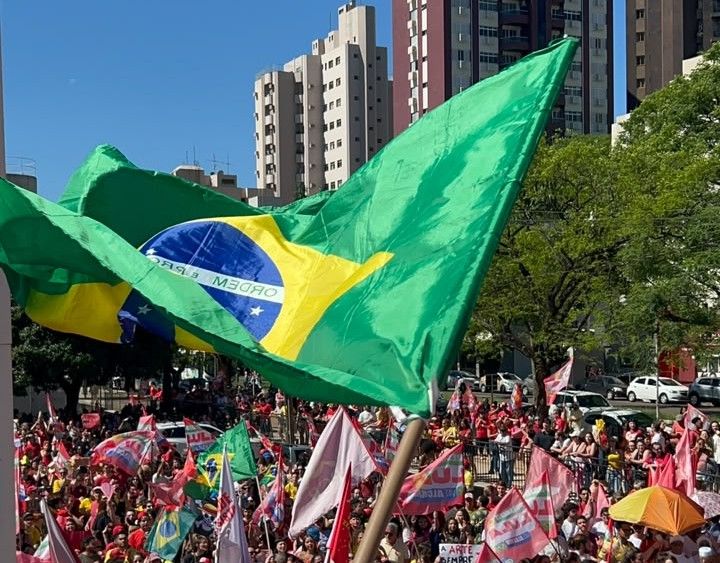
Maringá, BRAZIL – In a national election Oct. 25, Brazilians re-elected the left-wing candidate, Luiz Inacio Lula da Silva, as the president of the republic.
Listen to the author read this story:
According to the Superior Electoral Court, Lula, who was running for re-election, won with approximately 64 million votes, while the right-wing candidate, Flávio Bolsonaro – son of the former president Jair Bolsonaro – had around 59 million votes.
The results surprised everyone, especially the statistics. The day before the election, research institutes Quaest and Datafolha released the last vote intentions, showing Bolsonaro leading the pools with 51% against 49% for Lula.
But the final counting showed the opposite: Lula with 51% of the votes and Bolsonaro with 48%.
For Walter Tele, journalist and political commentator at radio CBN Maringá, the growing polarization in the national context is unprecedented in the new republic. Despite the chaotic situation, Tele pointed out that the elections were clear and organized.
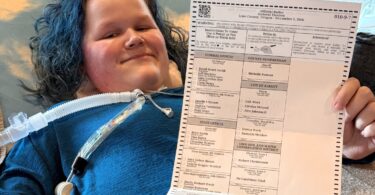
In Brazil, voting machines have been used in the elections since 2000, when they began to be widely adopted and replaced the common paper ballots. They are not connected to the internet, which makes the voting process more simple and safe.
According to the Electoral Court, all the machines were tested before the first and second election’s rounds. To add more transparency, this procedure was shown live on the Court’s YouTube channel.
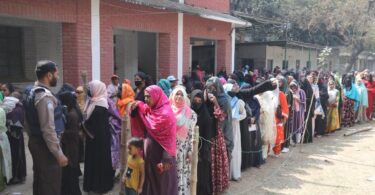
Usually, citizens vote from 8 a.m. to 5 p.m, but this time polls closed at 7 p.m.
According to the BBC News, Bolsonaro’s Liberal Party asked for more time to vote in some cities in São Paulo, Minas Gerais, Paraná, Santa Catarina and Rio Grande do Sul due to the heavy rain. Hours later, Lula ‘s Worker’s Party also asked for an extension after reports of lack of public transportation in important cities, such as Salvador and São Paulo.
Supreme Electoral Court Minister Cristiano Zanin said they only received the requests at 4:32 p.m., when they decided to extend the vote time to benefit affected municipalities.
But Bolsonaro alleged fraud and partiality in this decision, and in the results of the elections.
“When this extension of the voting period was decided, in fact, the vast majority of the voting machines had already been closed, and once closed, there is no possibility of reopening them, it’s a security mechanism,” said Tele.
Before 5 p.m., around 473,000 electoral sections had closed to voting. After it, about 24,000 remained open.
During this extra time, 34,939 extra votes were cast in the presidential election.
“There was no interference,” said Tele, “in the result of the voting machines. I think this is a discussion that is settled; the entire world has already recognized the legitimacy of the elections. The party of the candidate who lost the elections has already recognized it.”
So far, 107 countries and 11 international organizations have recognized Lula’s re-election. Donald Trump, U.S. president, has not recognized the results, nor has Brazil’s neighbor, Argentina.
For Fernando Schuller, a political scientist and commentator at the Brazilian newspaper Estadão, this was a choice made by society in the elections, and it must be respected.
“We have already gone through 10 presidential elections – perhaps by now we should have learned something. Democracy grants us the right to choose; it just does not grant us the right to choose the consequences of our choices,” said Schuller. “Whether your candidate wins or loses, the sun will rise again the next day. Those who lose may feel upset – they can go home, tend to their wounds, and perhaps return – who knows?—to win next time.”
Both Tele and Schuller are hopeful about the future.
“I hope that both the winner and the loser will observe the proper republican protocols – respect for the election result, first and foremost. And from there, let us continue along the long, difficult path back to what we once were – or, at the very least, what we imagined ourselves to be – as a democracy,” said Schuller.
Nicole Luna is a Senior Correspondent with Youth Journalism International.