
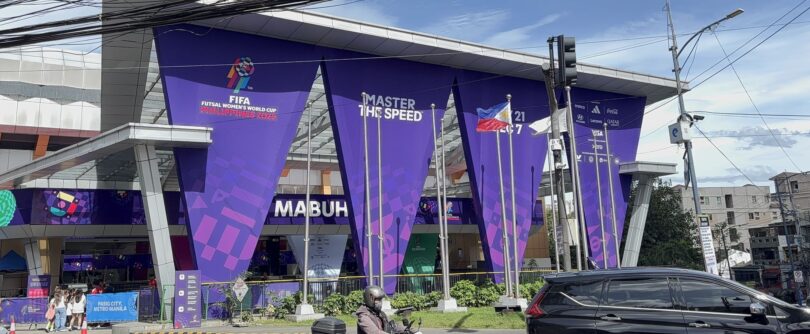
Pasig City, Manila, PHILIPPINES – FIFA’s first Women’s World Cup futsal tournament is taking place now at Philsports Arena in Manila.
Listen to the author read this article:
The 16-team competition, which opened November 21 and closes December 7, features countries from across globe fighting to become the first team to win the inaugural title of FIFA Futsal Women’s World Cup champion.

With the Philippines selected as the host nation for the tournament, expectations were set to follow in the likes of successful men’s and women’s football World Cups.
Futsal as a sport is consistently growing in popularity as a fast-paced alternative to the traditional 11-a-side football matches, with a large focus of the sport revolving around creativity, explosive reactions and accurate control.
As the first-ever FIFA futsal tournament specifically for female athletes, it marks a massive milestone in global recognition of women’s sports, opening new pathways for developing countries and smaller federations that do not receive much funding.

But the tournament is yet to make a significant impact as it has not been adequately advertised to the fan base of football followers and sports fans.

This inability to capitalize on an important and pivotal event in relation to the growth of women’s sports directly correlates to the low audience attendance and severe lack of transport options and infrastructure near the stadium.
To access the arena, individuals are required to order a Grab ride (Southeast Asia’s form of Uber) for 45 minutes, and upon arrival must walk on narrow pathways with raised concrete, as well as cross an eight-lane road with no pedestrian crossing or lights.

As a result of this poor planning, individuals in wheelchairs or with mobility issues would have no ability to enter the arena and would essentially be stranded on the busy streets of Pasig City.
These issues significantly damper the experience of attending a World Cup, as it becomes obvious that FIFA and the Philippine Football Federation and government have not taken the tournament seriously and have not worked to give audiences from the Philippines and abroad a truly positive experience.
Accessibility issues rightfully deserve attention and hopefully future tournaments will learn from these faults.
Still, it is undeniable that this competition has marked a new chapter for women in sports, bringing visibility to the global stage.
Isla Giron is a Junior Reporter with Youth Journalism International.


Another brilliant article from the incisive pen of Isla Giron. An exciting new young voice in Australian journalism.
Thank you for sharing details of this event. Let’s hope your insight leads to better events that are planned with equal access in mind.