
Cape Town, SOUTH AFRICA – Millions of posts are shared every day from all over the world on social media platforms such as Instagram, TikTok and X – a significant proportion of which are posts about current events from residents, onlookers or witnesses.
Listen to the author read an audio recording of this story:
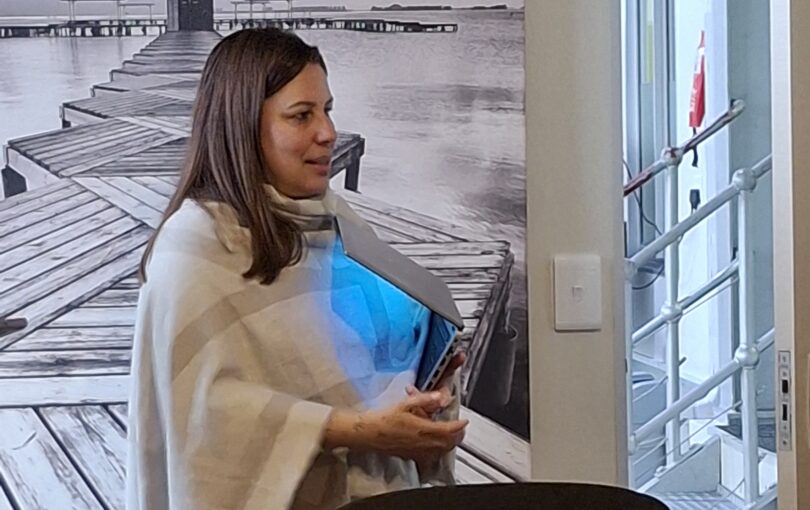
“In an age where anyone can publish to millions with just a phone and an internet connection, journalism has changed dramatically,” Zulpha Khan, deputy manager in chief at Kfm Radio in Cape Town, told Youth Journalism International students at the 2025 Global Conference in Cape Town.
When she began her career in journalism almost 20 years ago, the platform Twitter – now X – was already used to track current events or provide live updates via tweets, but not to the same extent as today, according to Khan.
Khan described a global challenge that affects journalists around the world. Work that used to be done by editorial teams – who filtered out the most important events, put them into context and only then published them – has become impossible since the boom of social media, she said.
Khan called it the “age of fake news” and outlined how newsroom practices shifted.
“We now have teams that are solely responsible for digital media, and fact-checking has become incredibly important, whereas on social media, new events are usually announced within a few hours without being validated,” said Khan.
This means newspapers, radio, and TV stations no longer compete solely with each other, but also with untrained individuals posting events in real time.
That means that something can be “all over social media” before a fact-checking news organization is able to report on it, according to Khan.
Speed is typically critical for news organizations to stay competitive and capture audiences, but it is precisely this speed and pressure that can jeopardize the trust of readers or listeners, something Khan wants to prevent.
“Our business is not one of apologies, corrections and justifications,“ she said. “Better to be right than fast.”
Lina Marie Schulenkorf is a Correspondent with Youth Journalism International from Germany. She wrote this story, contributed a photo and made the audio recording.

Click on the logo below for more from YJI’s 2025 Global Conference in Cape Town: