Colombo, SRI LANKA – Since its independence, as a founding member of the 1961 Non-Aligned Movement, Sri Lanka has avoided taking sides in any major world conflict.
While my nation’s past has been colored with violence, that has most mostly been internal rather than from an external war.
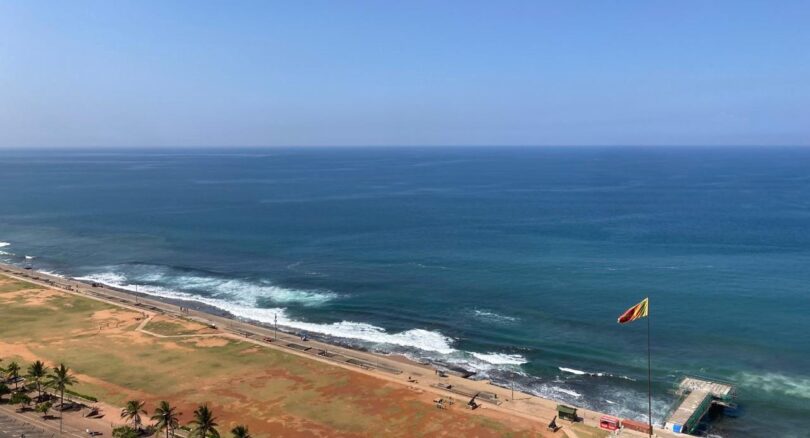
This distance from international conflicts came to an end on March 4, when the United States torpedoed and sunk the Iranian ship Dena, an Iranian naval vessel, off of the southern coast as it returned to Iran from India.
Listen to the author read this article:
The Sri Lankan Coast Guard received a distress signal from the ship and sped to the scene, rescuing 32 survivors and recovering 84 bodies, taking them to the coastal city of Galle.
It was when the Coast Guard arrived on shore with the bodies that a new problem emerged: where were they to keep the bodies?
Galle’s regional hospital could only hold 25 bodies at once, and transporting them to a major city was logistically impossible. Thankfully, local business leaders donated a storage unit worth 2.2 million Sri Lankan rupees (about $7,000 U.S.) to store the bodies while the government figured out what to do with them.
The bodies were sent back to Iran, but Sri Lanka was left housing the 32 surviving crew members alongside more than 200 sailors from the Iranian military ship Bushehr, which sought refuge in Sri Lanka’s harbor following the sinking of the Dena.
There are also reports that the U.S. is pressuring the government to keep the sailors in Sri Lanka, to avoid them being used as propaganda by the regime. The Sri Lankan government has since said it will deal with the situation according to international law.
It goes without saying that the human cost of the attack was immense.
According to the Sri Lankan Ministry of Defense, 32 survivors were picked up alongside more than 80 bodies from the Dena. News reports, including the Guardian, have said that the ship carried a crew of at least 180, meaning that many were lost in the sinking.
According to the BBC, the Dena wasn’t fully armed and had been participating in military exercises hosted by India.
U.S. President Trump has stated the generals sinking the ship did so simply because it was “more fun” than capturing it, which makes sense considering the US is not the one dealing with the aftermath.
Sri Lanka now has to cope with over 200 Iranian sailors on its shores, alongside coordinating the return of the bodies to Iran, both of which have cost the government valuable time and resources.
Already the government has had to rely on the charity of its own people to house the recovered bodies.
Locals have also reported seeing yellow chemicals wash up on our southern coast, while an oil patch has also been detected in the area, possibly from the sunken ship.
Environmental groups have raised concerns that this could seriously damage marine life in the area, while also making a major tourist hotspot unsafe, adding to the government’s problems due to U.S. actions.
Outside the Dena incident, Sri Lanka has also experienced the global cost of the wider campaign against Iran.
Oil prices have gone up, while tourist arrivals have decreased by around 30% due to travel disruptions due to the war, according to Sri Lankan tourism officials.
These issues have the potential to tank the Sri Lankan economy, which is still recovering from a financial crisis in 2022 that nearly bankrupted the country.
The government has also raised concern for the one million or so Sri Lankans living and working in the Middle East who have been put in danger due to this war.
It is important to note that Sri Lanka is not the nation worst affected by this terrible conflict. So far none of our citizens have been hurt, and we have not experienced any major economic cost not shared by the rest of the world.
Still, the irresponsible actions of the American government when carrying out these attacks against Iran have made life much harder for Sri Lanka and its people.
With no end to this conflict in sight, there is only one question left: how much worse will it get?
Shanish Fernando is a Reporter with Youth Journalism International.