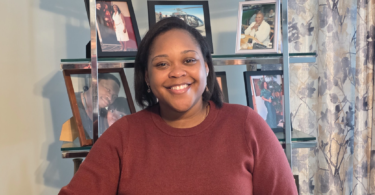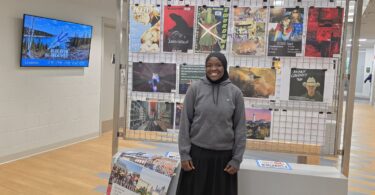
Seoul, SOUTH KOREA – When Hanna Song was growing up in Wales, her teachers couldn’t even find Korea on a map. Today, she leads one of the most important human rights organizations for North Koreans, the Database Center for North Korean Human Rights.
Listen to the author read this story:
In January 2024, Song became the executive director of the non-governmental organization, which documents the testimonies of North Koreans who have escaped the country. In an interview with Youth Journalism International, she shared the story of how she became an advocate for North Koreans.
“The good one or the bad one?” That’s what people would ask Song when she mentioned her Korean heritage as a child in the ‘90s in Wales. Back then, even her teachers thought Korea was part of China and couldn’t find it on a map.
But as North Korea began making headlines with devastating famines and nuclear weapons development, curiosity grew.
That odd childhood question stuck with her ever since – what makes a country “bad?”
Wider perspectives on human rights
Song’s path wasn’t straightforward. Growing up as one of the only Korean families in her Welsh town, she always thought about what it means to be part of a community.

“We didn’t have a lot of money. My dad was a student, but we always had people at our house,” she recalled. “I just grew up always thinking about what it means to be part of a community and what it means to do what you can as a person to support other people.”
“I used to think being a doctor was the only way you could do that,” she continued. “And it’s a very important way to do so – directly saving somebody’s life.”
But as time passed, Song questioned how to have an impact not just on individual lives, but on society itself.
“And that’s where I got a little bit more interested in human rights and how I ended up working at a human rights NGO.”
A scholarship to an international boarding school at age 16 became a turning point. The school was founded during the Cold War with one goal: teaching the next generation to live in peace and harmony.
“They just trap you in that school,” Song said with a laugh, describing the rural campus 40 minutes from the nearest convenience store. But there, meeting students from across the globe, she learned “how big the world is, but also how small it can be as well.”
A friend from the same school gave her a book written by North Korean defectors.
“All you see about North Korea in the news is about the nuclear weapons or the military parades,” Song said. “But you never hear about the people.”
Reading those stories changed everything. “Once you hear a story, it’s hard to forget.”


Items from North Korea on display at the center. The left image includes a North Korean passport. The right image shows things that defectors brought with them when they left North Korea. (Josephine Yein Lee/YJI)
The work
Founded in 2003, the organization does two critical things: it documents the testimonies of North Korean defectors for future justice and accountability, and it provides direct support to survivors now living in South Korea.
“We started our work because we thought it was really important that these stories are documented and are kept, so that when there is a future change in North Korea, or if there’s unification, the stories of the victims are not forgotten,” Song explained.
The organization offers psychological counseling to victims of human trafficking and torture. During her interview with YJI, Song sat in front of shelves of books, all written by North Koreans as a counseling technique to help them gain control of their stories.
“We’re not just speaking about human rights,” Song emphasized. “We work directly with victims as well.”
But the organization, along with others addressing human rights in North Korea, is experiencing funding cuts that could jeopardize their work, according to an interview Song gave to CIVICUS, a global alliance of civil society organizations advocating for citizen freedoms.
In the interview, published last September by CRU Indonesia, Song said cuts in aid from the United States created a “huge crisis.”
“For two decades, the USA played a unique role in sustaining the global movement for truth, justice and accountability for the people of North Korea,” Song said in the interview. “It was the only government that provided consistent and large-scale support for documenting human rights abuses in North Korea. In the absence of alternative funding, this support enabled much of the North Korean human rights movement to exist. Now that movement is facing its greatest crisis since it began in the 1990s.”
Asked by Youth Journalism International about the cuts in U.S. aid, Song declined to elaborate.
The freedoms missing in North Korea
Speaking with Youth Journalism International about the work, Song identified two pressing issues North Koreans currently face: access to information and freedom of movement.
“Less than 0.07% of North Koreans have access to the internet,” she said. “The South Korean dramas that everybody around the world can watch – North Korean children can’t see them, yet they’re so close to South Korea.”

Trying to leave North Korea is considered political treason, resulting in prison camps and torture.
“If I hadn’t lived in the UK, I don’t think I would be interested in this issue. If I wasn’t able to come back to South Korea, I wouldn’t be able to use my voice in this way. Everybody should have the freedom to move,” she said.
Over the past decade, the reasons people flee have shifted, according to Song.
In the early 2000s, everyone left for food and survival. Now, while food has improved, awareness has grown. “When we say we’re a human rights organization, they say, ‘Oh, I’ve heard of that before,'” she said. They don’t know the details, but they know it’s something their government fears.
Recruiting youth to the cause
North Korean human rights can feel distant and irrelevant to daily life in South Korea, but Song argued otherwise.
“The global community has a certain expectation of South Korea. If you travel overseas, if you go to university, you’re going to be asked about North Korea,” she said. “You need to have a stance, whether you want to or not.”
Song said she advises young people to connect North Korean human rights to what they already care about – climate change, women’s rights and children’s rights. All of these connect to North Korea and unification.
And you don’t have to work at an NGO to make a difference, Song said.
“You can be a human rights advocate by becoming a diplomat, a journalist, or even working at a corporation that supports organizations financially,” she said. “Think about how you can live many different lives in one career path.”
A light in the darkness
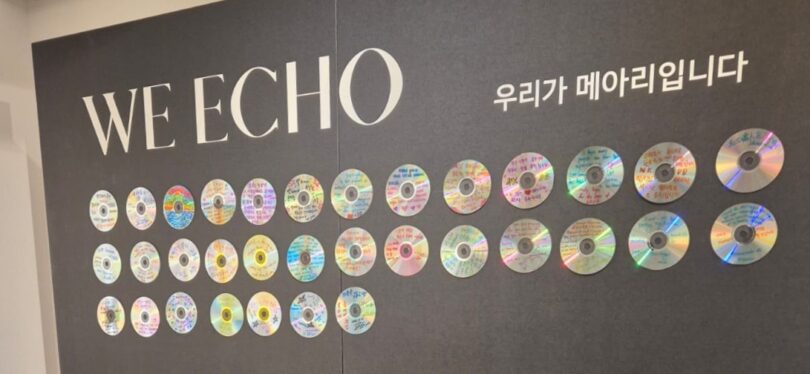
Despite the challenges, Song refuses to lose hope. She’s working to build a museum, to create spaces where stories can be heard and remembered.
Her dream?
“I’d love in 5 or 10 years for you to be able to do this interview with a North Korean person in North Korea, for them to be able to speak freely on the issue.”
Song’s message to North Koreans is simple but powerful: “We’re here, we’re listening, and we will never forget. There’s always a brightness that has to come at the end of darkness.”
And to South Koreans and the world?
“Just because you don’t hear what’s happening doesn’t mean it’s not happening. Just because you don’t see it doesn’t mean people aren’t experiencing it.”
Josephine Yein Lee is a Senior Reporter with Youth Journalism International.