Cordoba, ARGENTINA – Before travelling to Cordoba, Argentina, with a university group, I was entirely unfamiliar with the city’s history.
I had never studied Latin American politics in class, and knew nothing about the military dictatorship that ruled the country from 1976 to 1983 or the thousands of people who were forcibly disappeared.
Listen to the author read this article:
What I expected to be an opportunity to learn about a new place and its history became something much more meaningful. My short time in Cordoba forced me to recognize how a painful history impacts the everyday lives of Argentinians today – and what that means to me, as a young American.
Cordoba, as I learned very quickly, was the center for militant labor and youth protest during the dictatorship of Jorge Rafael Videla. The fierce resistance and political culture of the city also made it a center of repression by the military.
There are several clandestine detention centers in Cordoba and surrounding areas. I visited Campo de la Ribera, primarily a detention site, and La Perla, an extermination center and death camp. Both were turned into museums and places of memory for visitors today. They aim to preserve the memories of the estimated 30,000 disappeared people – most of whom were young people.
Driving to La Perla, I was struck by how peaceful the landscape was. Then I began to wonder: how can a place so horrific be surrounded by such beauty? The victims brought to the camp decades ago never had the chance to see it, blindfolded and handcuffed until their murders.
A researcher at La Perla had greeted us when we arrived, explaining that what we would see would be extremely difficult. Hearing someone describe a place is one thing, but standing in the rooms where people were brutally murdered was entirely different.
The most heartbreaking part of the museums, both Campo de la Ribera and La Perla, were the pictures of the victims. Many were my age. Many were younger.
I felt like screaming and crying in many of the rooms, but I couldn’t. The silence seemed like it wanted to be undisturbed, holding the voices of the lives that ended there.


Above left: A holding room for prisoners at La Perla. Many were
murdered here. Above right: Outdoor execution chambers at La Perla. Images by Sreehitha Gandluri for YJI.
I wondered if I was – or ever would be – brave enough to speak up the way they did.
Would my beliefs, that I claim are unwavering, be as strong under threat of torture, rape, and execution? I do not know. I am grateful that I do not have to.
Memory and justice remain important parts of Cordoba’s society today. Through these museums and memorials, I saw that people were trying to preserve the stories of the disappeared and ensure that their history is never forgotten.
“Nunca mas,” I read in every museum. Never again.

Archeologists are still working to find, excavate, and identify the bodies of the people who disappeared over 50 years ago, hoping to give families some closure. Human rights courts in the country continue to collect evidence and prosecute those who engaged in these inhumane crimes.
Those same archeologists are helping identify bodies at the U.S.-Mexico border today. They work with NGOs to offer families across Central and South America knowledge about their loved ones who died trying to cross the border. Their graves are often unmarked, many with trash thrown in them.
Argentina is working to provide their disappeared with dignity, but we have yet to make that effort. I am embarrassed by my country, that we cannot use our seemingly infinite resources to respect the people who died seeking refuge here.
How many tragedies have we ignored? How many brutal crimes have never been discussed, or worse, brushed off as part of America’s nation-building project?
Cordoba remains politically active and a center for resistance today, with more youth engagement in politics than I’ve ever seen at my American university.
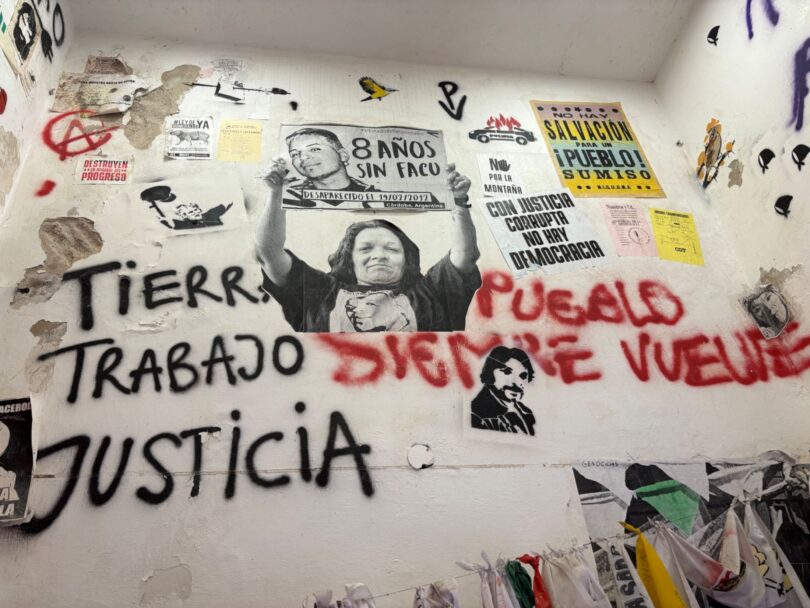
As I walked through the campus of the Universidad Nacional de Cordoba, the oldest university in Argentina, I saw walls covered in political posters protesting the current president, Javier Milei. I even got to watch the students cheer as ballots were counted in their university-wide elections.
My time in Cordoba changed the way I understand history and resistance. Acknowledging history, even its darkest moments, is essential for building a more just future.
This scares me. What does it mean as an American, that we have yet to confront much of the silence, repression, and injustice that lies beneath almost every part of our history?
Without recognition, is there any way to move forward?
Sreehitha Gandluri is a Senior Correspondent with Youth Journalism International.