
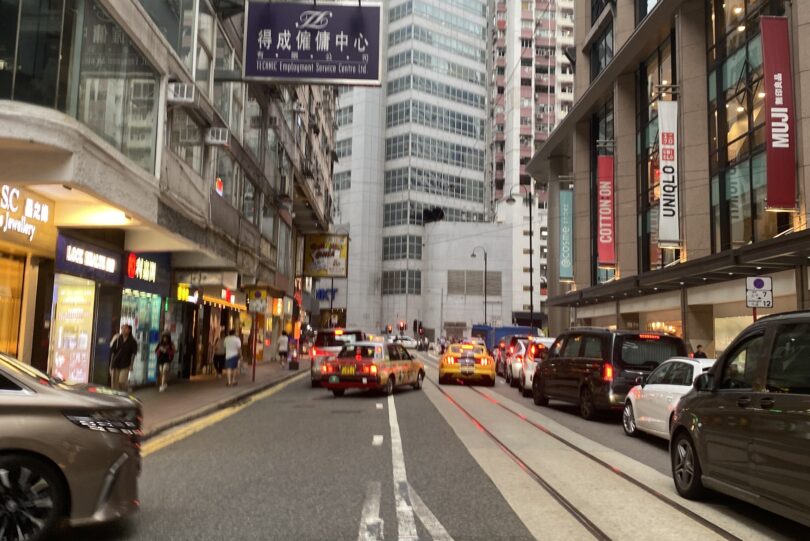
HONG KONG – To outsiders, Hong Kong is a postcard-perfect skyline, an international city, a financial powerhouse, a city that never sleeps. But to me, it’s something else entirely.
Listen to the author read this article:
It’s the scent of soy sauce and star anise wafting from a dai pai dong on a humid evening. It’s the alleyways filled with stalls selling daily amenities with prices that are lower than anywhere else in the city.
It’s the rhythmic clatter of mahjong tiles from an upstairs flat, mingling with the honking taxis below. It’s the elderly man on Pedder Street that I pass by every day who’s been repairing watches for 40 years.
This is the Hong Kong I know.
Growing up, I’ve always liked going to dai pai dongs, but I never thought much about them. They were cramped, noisy open-air food stalls where my family would crowd around plastic stools for Sunday morning tea. The owners shouted orders, the tea was strong, and the char siu bao (barbecue pork buns) were always steaming hot.
It wasn’t until I got older that I realized these places were disappearing.
Now, when I pass by the few remaining stalls, I feel a pang of nostalgia. The government stopped issuing licenses decades ago, and the ones left are run by aging proprietors with no one to take over.
Irene, the sharp-tongued owner of a dai pai dong in Central, where I used to go every week, once scolded me for taking too long to order. “Hurry up, kid! This isn’t a hotel!” she barked.
At the time, I was embarrassed, but now I smile at the memory. That gruffness was part of the charm, part of the dai pai dong and Hong Kong style.
Hong Kong may look like a Westernized metropolis, but beneath the surface, it’s deeply Chinese.
Superstitions dictate many aspects of our lives. For example, fengshui determines our furniture placement. My grandmother refuses to let anyone stick their chopsticks upright in rice (bad luck), and no one in my family would ever live on the fourth floor because the number four sounds like “death” in Cantonese. Even the most modern office buildings skip the 4th, 14th, and 24th floors.
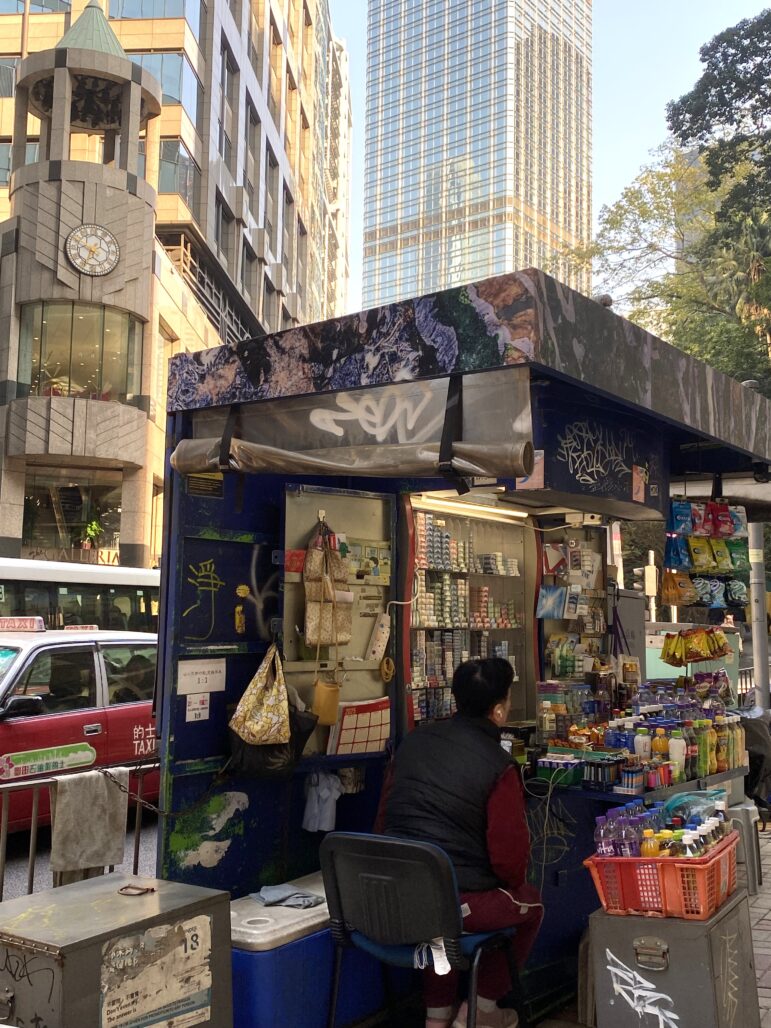
What fascinates me most about Hong Kong is its contradictions. In Central, bankers in tailored suits stride past sidewalk cobblers hammering leather soles back onto shoes. A luxury mall might stand next to a stall selling curry fish balls, a snack so iconic that every Hongkonger has a strong opinion on where to find the best ones.
But there’s a darker side, too. Many elderly people, some well into their 70s or 80s, still work because government subsidies are meager and rents are brutal.
My neighbor, Uncle Cheung, repairs umbrellas under a tarp near the wet market. He’s been doing it since before I was born.
“Young people don’t fix things anymore,” he grumbles. “They just throw them away.”
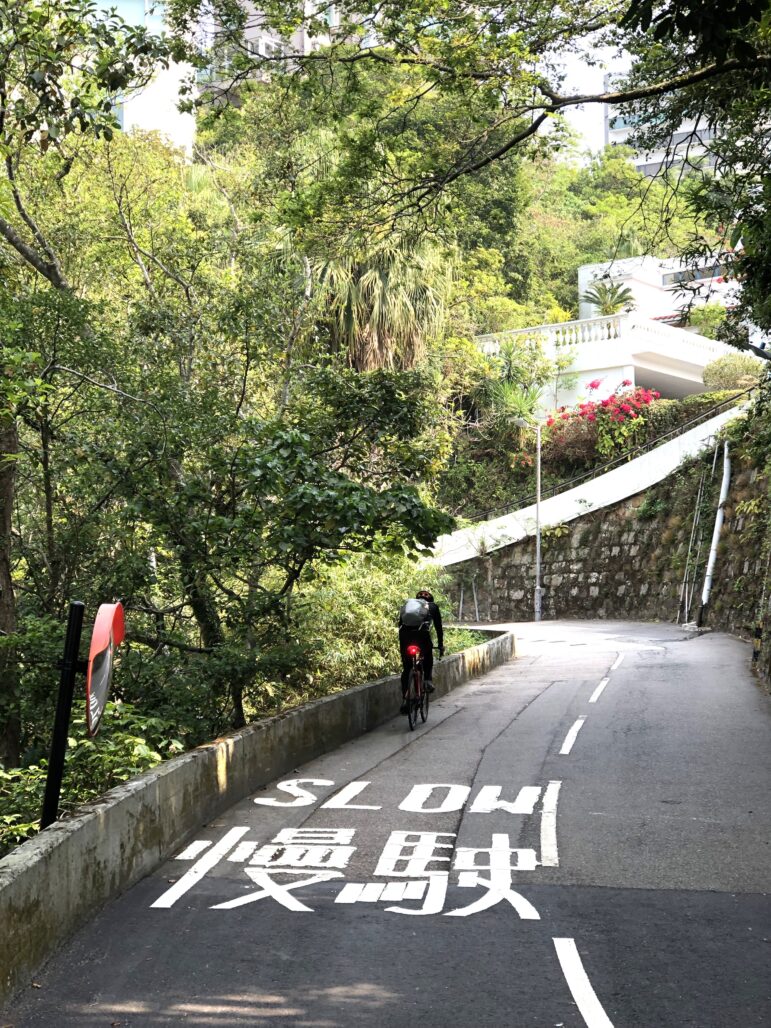
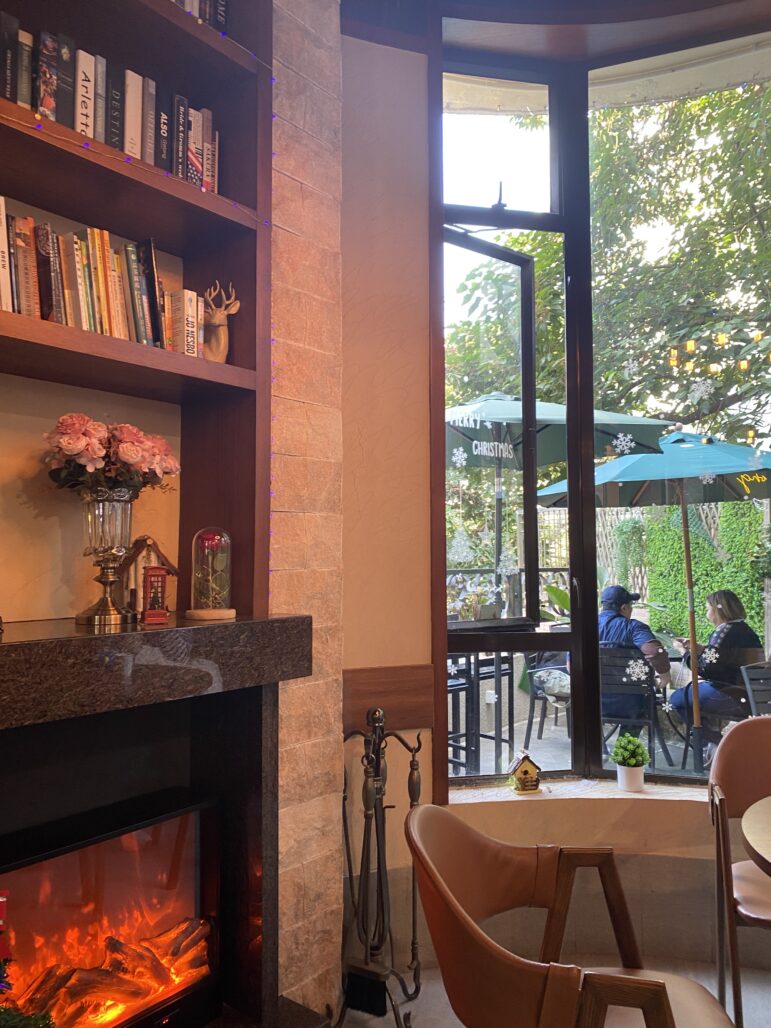
And when people ask me about my favorite spots in Hong Kong, expecting a cozy café where I spend my afternoons, a park where locals gather, a little bookstore where everyone knows my name, I don’t have an answer. Not because I don’t love this city, but because Hong Kong doesn’t work like that.
This isn’t a place where you stroll down tree-lined streets, bump into neighbors, and stop by the same bakery every morning. Hong Kong is a city of efficiency, of moving from point A to point B as quickly as possible.
Home isn’t a neighborhood you grow roots in. It’s just where you sleep between packed schedules.
From the moment I was old enough to commute alone, my days became a series of checkpoints: school, tutoring, cram school, maybe a quick meal squeezed in between. There’s no wandering, no lazy detours. You can’t walk from one place to another, not because it’s impossible, but because no one has the time.
I’ve lived in the same apartment for years, but I couldn’t tell you the name of the family next door. The elderly lady who sells fruit downstairs recognizes me, but we’ve never exchanged more than a nod. In a city this dense, you’d think community would be unavoidable, but it’s the opposite. Everyone is too busy, too tired, too focused on the next thing.

Even when I try to slow down, the city doesn’t let me. If I sit too long at a cha chaan teng, the waitress starts clearing my plate before I’m done.
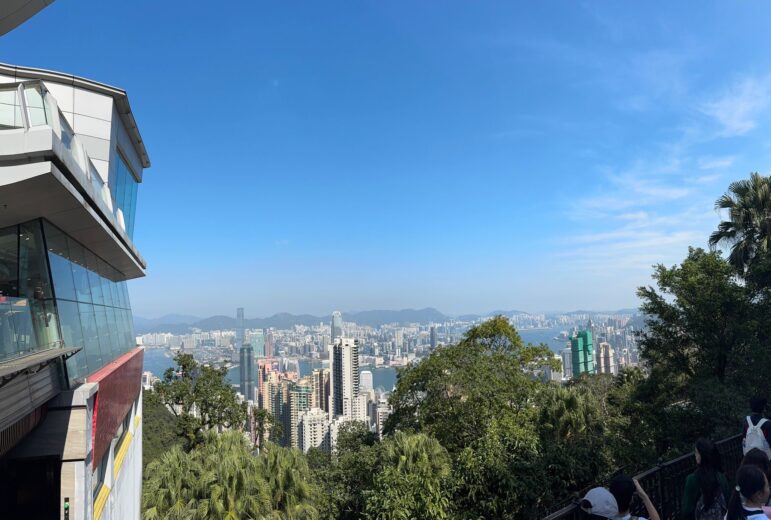
If I pause to watch the sunset over Victoria Harbour, someone bumps into me, muttering, “Excuse me, excuse me,” as they hurry past.
Sometimes I envy people from small towns, where every corner holds a memory: the ice cream shop where they had their first date, the basketball court where they skipped class, the diner where they celebrated exam results.
Hong Kong erases itself too fast. The noodle stall I used to visit after school got replaced by a pharmacy. The playground where I swung as a kid is now a luxury condo. But you just move on.

Hong Kong is relentless. It’s fast-paced, competitive, and exhausting. The cost of living is suffocating, and the work culture is unforgiving. Sometimes, I dream of leaving, of living somewhere quieter, where I won’t have to live squeezed in an apartment and where life doesn’t feel like a race.
But then I’ll turn a corner and smell egg waffles cooking on a griddle, or hear the familiar ding-ding of a tram, and I’ll remember why I stay.
This city is flawed, but it’s mine. It’s where my grandparents raised my parents, where I grew up eating pineapple buns fresh from the bakery, where I learned to navigate crowded streets like a pro (I still occasionally need Google Maps).
It’s the city that taught me to move fast, to adapt, to find comfort amidst chaos. I might not have a favorite spot, but I have a rhythm: the way I instinctively match my steps to the crowd’s tempo, the way I can navigate an MTR station without breaking stride, the way I know exactly which cha chaan teng makes the crispiest French toast – even if I’m only there for 20 minutes.
Hong Kong doesn’t give you a hometown in the traditional sense, but it gives you something else: a relentless, electric energy that becomes part of you. And for now, that’s enough. No matter how much it changes, that’s the Hong Kong I’ll always carry with me.
Sophia Ling is a Junior Reporter with Youth Journalism International.


This is amazing!! 🙂