
Cape Town, SOUTH AFRICA – Cape Town is an unexpected case study in how humans and wildlife learn to live amongst one another.
South Africa’s global image is dominated by the “Big Five” – the lion, leopard, rhino, African elephant and Cape buffalo – but many lessons play out in parking lots, gardens, cableway stations, and coastlines rather than on the safari.
Listen to an audio recording of this article:
Even without the iconic lions or elephants, the urban and peri-urban edges of Cape Town hum with the presence of non-human neighbors, each responding in their own way to the structures, messes, conveniences, and curiosities we bring into their world.
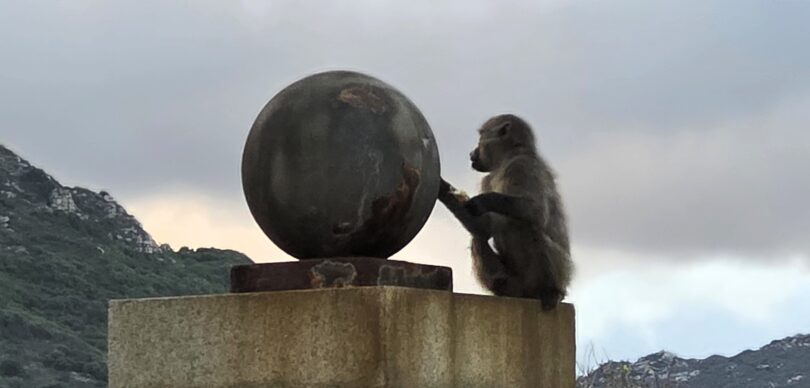
Glimpses of negotiations in our coexistence with wildlife are evident through penguins interrogating litter, blurred borders at stone ledges and trash cans, signs announcing the presence of wildlife, and other assorted human-animal interactions at windowpanes, sidewalks and viewing outlooks.

Biodiversity is everywhere.
Each of these scenes are examples of moments where animals interacted with places that have already been shaped by human choices.
Though we sometimes forget, our windows, walls, trash bins, beaches, sidewalks, and cities are shared with hundreds of other species.
What stood out most was the contrast between the harm humans can cause without noticing and the repair we can create when we try.
There is a similar contrast between the hundreds of houses nestled in Cape Town’s valleys, and the countless plants and animals within and surrounding the city. On one hand, dropped litter can disrupt critical habitat. On the other hand, human-created nesting shelters can help penguins survive heat and habitat loss.

Humans can choose to let that influence accumulate in ways that make life harder for animals, or in ways that give them a better chance to adapt.
Our future coexistence depends on our choices.
Annamika Konkola is a Correspondent with Youth Journalism International from the United States. She wrote this article, contributed photos and made the audio recording.

Click on the logo below for more from YJI’s 2025 Global Conference in Cape Town: