Fez, MOROCCO – The ongoing war in Yemen robbed many citizens of access to education, healthcare and employment, leaving them without hope for the future, several people said in interviews with Youth Journalism International.
War, they said, is so normalized that it is common to talk about losing family members to the fighting.
A Yemeni pharmacist, teacher and university student spoke with YJI about the situation there. The interviews, conducted in Arabic, have been translated to English.
“The near future is very scary,” said Abd Al Hamid Maraai Al Awadi, an out-of-work teacher from Sanaa, Yemen. “We feel like we are in a dark tunnel.”

A house after a bombing. Image by Hassan El Dahmi, used with permission.
Why is there war in Yemen?
Reasons for the first spark of the problems in Yemen differ among those interviewed, but all agreed that it all began after the Arab Spring uprisings almost a decade ago.
When a jobless man set himself on fire in 2010 and ignited a revolution in Tunisia, he inspired Yemenis to push for change, too, said 28-year-old Hannan Al a Moodi of Aden, Yemen, who worked as a pharmacist before the war. She now makes and sells her own soap.
“We wanted our country to improve and move forward, we wanted better living conditions, we wanted to decrease employment rates, we wanted to improve health and education,” Al a Moodi said. “We were oppressed and silenced for so long, we wanted freedom of speech, we wanted equality and equal treatment for all the citizens regardless of their gender or social status.”
“We were not expecting that our demands for our basic rights would turn into huge political wars,” Al a Moodi said, “with so many countries getting included and involved – not to help but just to profit off of the people’s and Yemen’s sufferings.”
Al Maraai Al Awadi, 41, a schoolteacher whose job ended because of the war, blamed foreign neighbors Saudi Arabia and the United Arab Emirates for starting it. The Gulf states feared that the youth revolution would spread to their countries, so they fed and supported counter-revolutions, Al Maraai Al Awadi said.
Al Maraai Al Awadi said the Saudis and UAE installed Yemen’s leader, Abd-Rabbu Mansour Hadi, because they could control him.
“He had a weak personality,” said Al Maraai Al Awadi. “He was a just like a doll in the hands of Saudi Arabia. From then, Saudi Arabia had complete control over the government.”
International observers also pin blame on Iran, which is arming a faction opposed to Hadi that controls large parts of the country.
Whoever is at fault, the situation in Yemen is growing worse, the Brookings Institute in Washington, D.C. recently noted.
“The country is splitting apart as the pandemic ravages the poorest country in the Middle East,” it said.

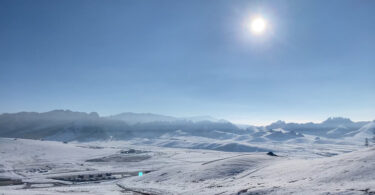
A view of rooftops and mountains in Yemen. Photo courtesy of Abd Al Hamid Maraai Al Awadi.
Effects of war on the Yemenis
Hassan El Dahmi, who had been studying mathematics at Iman University before the war ended his classes, is an 18-year-old from Sanaa, Yemen.
According to El Dahmi, there are no stable salaries anymore.
“Every citizen works for a job that most of them did not used to work at before,” El Dahmi said.

Hassan El Dahmi, a university student in Yemen (photo provided)
Yemen is paying a terrible price for the war, according to Al a Moodi.
“The Yemeni people sacrificed their best youth in the hope that the country would reform and hope for tomorrow and a better future,” she said. “Unfortunately, the revolution lost. No one helped us, no one supported us.”
In Aden, Al a Moodi said, every house and every family has lost at least one person to the war.
“I lost my brother to the war, and I don’t know if my parents, my brothers and sisters or I will be alive tomorrow,” she said.
The economy in Yemen is destroyed, according to the three people interviewed.
“The war generated a serious economic downturn,” said Maraai Al Wadi, “which is 85% of the Yemeni people are considered below the poverty line because of the lack of work, jobs, and sources of income.”
El Dahmi said other countries are detaining ships destined for Yemen, making trouble in the oil industry.
In part because of this and an emergence of a black market, El Dahmi said, food prices are really high, with a carton of milk costing $7 USD.
Al a Moodi said it isn’t just food prices, but housing costs and other expenses are on the rise, too. She said people use U.S. dollars and Saudi riyals.
“The Yemeni riyal no longer has any value,” she said.
According to Al a Moodi, people must cope with their electricity being shut off, sometimes as often as every two hours. She said there are times that the power is out continuously for six hours, which is especially difficult because the weather is very hot.
“There is a deficiency of food and clean water,” she said, “and this is one of the many reasons that cause the death of tens, if not hundreds, of Yemenis most of them are kids.”
When asked about how people earn a living in Yemen she said, “Some jobs totally stopped like courts, judiciary, immigration, passports, employment, and company appointments.”
Some people who work in the government sector do receive a monthly salary, she said, but most of them aren’t paid regularly. Some might get their salary after three months or longer, she said.
The troubles with the oil industry, Al Maraai Al Wadi said, are an example of the impact of the war, because Yemen is a country with significant oil reserves, though far less than many of its neighbors.
“The simplest hardship we are facing is the gasoline queues that extend for more than three kilometres,” Al Maraai Al Wadi said.
No matter what the politics are behind the conflict, the citizens of Yemen are paying the price.
“Everyone trades with the suffering of the Yemeni people,” said Al Maraai Al Wadi.
Education in shambles
As a teacher, Al Maraai Al Wadi talked about the devastating impact of the war on the Yemeni youth.
“The current generation does not carry education or knowledge,” he said. “Some of them go to schools but they don’t learn anything. How can you study knowing that you might die in the classroom? How can you apprehend a lesson while hearing a bombing just a few kilometres away from you?”

Abd Al Hamid Maraai Al Awadi, a teacher who is out of work in Yemen because of the war. (photo provided)
Making matters worse, according to Al Maraai Al Wadi, some militias are trying to arm children to supplement their fighting fronts.
For those who can attend university, the cost is getting harder to bear, according to El Dahmi.
El Dahmi talked about the difficulties students face in Yemen, and the rise of college tuition along with a decrease in job opportunities.
“After the war, all tuition fees were raised,” he said. “The semester was around approximately 13,000 riyals, and then it became 150,000 riyals.”
Al a Moodi said there is an absence of authority, law and morality.
“The war has destroyed the values and morals of society,” she said, adding that because of the war children are at risk of starvation and don’t have access to education, clean drinking water or health care.
“Patriotism is in the hearts of individuals, but sometimes I wonder, why would the individual feel a sense of belonging to the homeland robbed of his most basic rights?” Al a Moodi said.
The World Food Programme said this year “the current level of hunger in Yemen is unprecedented and is causing severe hardship for millions of people,” leaving 20 million Yemenis insecure in terms of food, half of them feeling “acutely food insecure.”
“The rate of child malnutrition is one of the highest in the world and the nutrition situation continues to deteriorate,” the food agency said. “A recent survey showed that almost one third of families have gaps in their diets, and hardly ever consume foods like pulses, vegetables, fruit, dairy products or meat. Malnutrition rates among women and children in Yemen remain among the highest in the world, with more than a million women and 2 million children requiring treatment for acute malnutrition.”
Health challenges
With so many Yemenis in need of humanitarian help, the war makes the coronavirus pandemic more difficult to bear.
“Living conditions in Yemen are unthinkable,” said Al a Moodi, the pharmacist. “In terms of health due to the spread of the epidemic, unfortunately, there is a lack of analysis, examinations, and hospitals.”
There are special laboratories for conducting the tests for covid-19, she said, and each one is different as far as what it can offer in treatment because the government did not provide treatments.
“For the masks and gloves, they are of course not used and not even available,” said Al a Moodi. “People walk down the streets without using any form of protection against the virus.”
At the beginning of the spread of the disease, non-governmental organizations provided some aid to the medical staff, according to Al a Moodi. As for the government, it did not make any attempt to help to protect the citizens against the virus, she said, and most hospitals were closed.
Currently, hospitals are starting to work, but with poor capacity, according to Al Maraai Al Wadi. Most people who need care want to go to private hospitals, as some of them offer medicines for free as a form of help, he said.
He said that beyond the threat of covid-19, Yemenis face other diseases, including malaria and malnutrition
Considering the poverty, Al Maraai Al Wadi said, “This is a disaster in itself.”
Yemen’s future
When asked about their country’s future, the three people interviewed shared the same feelings of hopelessness and pessimism.

Hassan El Dahmi’s family meal in the current conditions. (Photo by Hassan El Dahmi, used with permission.)
“The people are desperate, and I do not think that they will make new sacrifices, because they are tired and hopeless,” said Al a Moodi. “Right now everyone just strives to stay alive, we don’t care about anything anymore.”
The three also agreed that foreign military intervention is hurting Yemen more than it is helping and that it should stop.
Al Dahmi said, “We want people to like us who understand us and share the same history as us, the Arabs, to work together and activate the role of the Arab League in resolving the conflicts without the intervention of any western power or any foreign country.”
The situation won’t get any better as long as there are profits to be made by foreigners selling weapons, Al Dahmi said.
“As long as there are wars, arms factories will continue to ignite wars and conflicts,” said Al Dahmi.
“We have lost the closest people to our hearts because of the war. The war deprived me of seeing my dad. He was killed before I was born,” Al Dahmi said. “Every day innocent people die and no one cares. All that they want is money and authority.”
Al a Moodi said she wants people to listen to Yemeni citizens and to talk with their families and friends about it to raise awareness.
“We want our voices to be heard. We want the world to know that we are facing an inter-generational war for our freedom and equality,” she said.
Al Maraai Al Wadi said any effort, big or small, could help a family get a meal to save them from hunger even for a day, to wipe the tears of an orphan, or treat a sick person.
“Just please, don’t forget about us,” the teacher said. “We need the world’s help. I feel like we scream so loudly yet none hears us.”
Manar Lezaar is a Reporter with Youth Journalism International.