SRI LANKA – Since making landfall two weeks ago, Cyclone Ditwah has devastated the country with torrential rains, floods and landslides that killed more than 600 people and wreaked havoc on large parts of the island nation.
Listen to an audio recording of this story:
According to the most recent government Disaster Management Center stats, at least 639 people have died because of the extreme weather, with a further 192 missing.
More than 85,000 homes have been damaged, alongside roads, railways and bridges across the nation.
In total, the November 28 cyclone impacted more than 1.7 million people. The storm also hurt animals, both domestic and wildlife.
In an address to the nation, President Anura Kumara Dissanayake described the cyclone as “the most challenging natural disaster in [Sri Lanka]’s history” and called for international aid.
Dissanayake has also called a state of emergency in order to deal with the disaster.

Allies have stepped up to help Sri Lanka with both manual labor and financial aid. India and Pakistan dispatched rescue choppers and emergency personnel while countries such as the United States stepped up with financial aid.
According to information posted on the Sri Lankan Army website, the Sri Lankan Armed Forces have been deployed to carry out rescue attempts and distribute humanitarian aid across the country.
The United Nations has also been coordinating relief efforts with the Sri Lankan government and other aid organizations.
Ditwah caused landslides and floods that particularly affected the Central Highlands of Sri Lanka, with the Kandy district having the highest recorded death toll of 234, followed by the Nuwara Eliya and Badulla districts.
Due to the immensity of the disaster, some villages in the mountain regions were wiped out, making access to those zones impossible even for rescue crews.
Some schools in affected areas have “completely gone down,” said Milani Salpitikorala, an attorney who founded the Child Protection Force, a child and women’s rights organization in Sri Lanka.
In an interview with Youth Journalism International, Salpitikorala said many children are currently in care centers or government camps.
Salpitikorala’s organization coordinated efforts to distribute aid and document children in care centers across the nation.
Torrential rains have also caused major rivers such as the Mahaweli and Kaleni to overflow and flood surrounding areas, including on the outskirts of Colombo, the nation’s capital and most populous city.
Colombo neighborhoods such as Kaduwela and Wellampitiya were flooded with water from the Kelani.
Minali Fernandopulle, a resident of the Puttalam District where 37 people have died spoke with Youth Journalism International about the disaster.
Because of Mahaweli flooding, Fernandopulle said, people “have lost their houses.”
Many of the affected have been sheltering in churches and schools in the area, Fernandopulle said, adding that clay from pottery factories in her area had “dirtied the water” and caked many houses in mud.
Falling trees from the cyclone’s strong winds have also contributed to property damage across the country.
The United Nations and World Health Organization have both warned that lack of clean water and food insecurity will become mounting problems in the worst affected areas.

They have also warned that the cyclone may burden Sri Lanka’s already fragile health system, which was strained in 2022 by the country’s economic crisis.
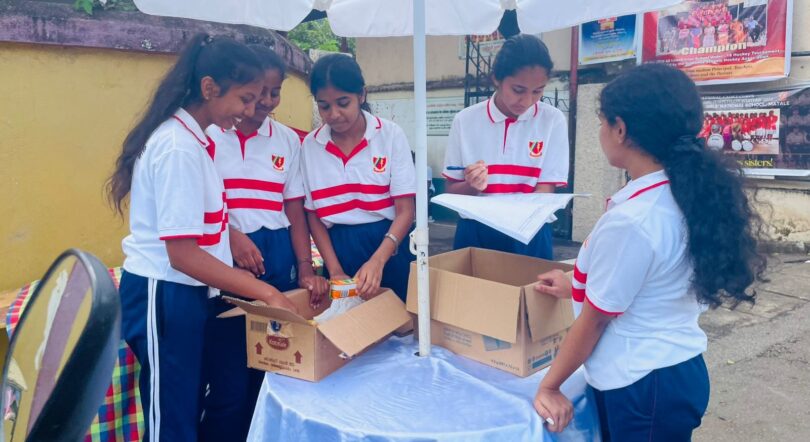
As aid is reaching the most affected areas of the country, religious institutions, schools and charities in major cities have organized aid and food drives to help the most vulnerable.
Charities throughout Sri Lanka have mobilized and people from unaffected areas stepped up to do what they can.
Salpitikorala said she “didn’t know one Sri Lankan who has not helped” during the crisis.
Shanish Fernando is a Reporter with Youth Journalism International from Sri Lanka.
Dulmini Mayadunna is a Junior Reporter with Youth Journalism International from Sri Lanka.