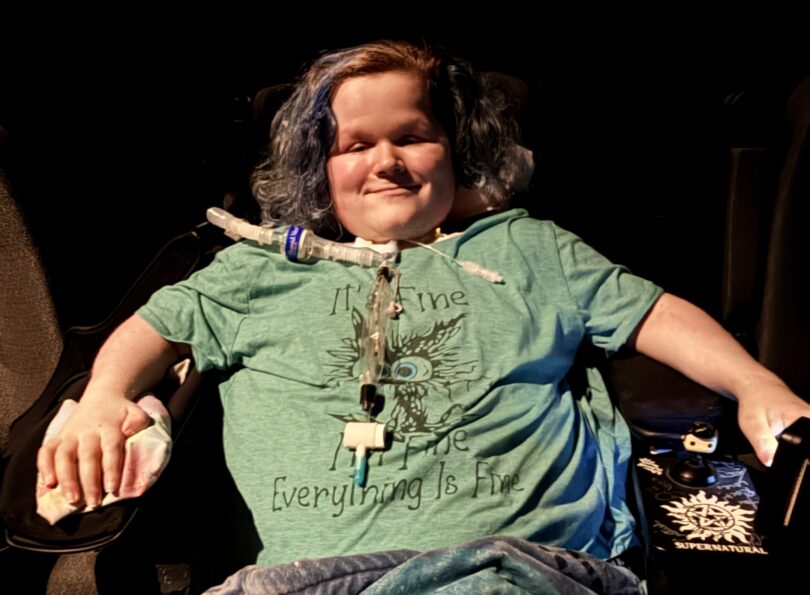
Albany, Oregon, U.S.A. – I’m a disabled 18-year-old but if I was born in the 1950’s or 1960’s, my story would have been vastly different than it is today.
Listen to the author read this review:
Accessibility has a long way to go, but believe it or not, in the U.S., disabled children and adults were not allowed education in the past because they were deemed a “fire hazard.”
Teachers and others simply didn’t make an effort to meet the needs of disabled students.
The laws that did not fix this, but created betterment within society for everyone, were Section 504 and the Americans With Disabilities Act.
Section 504’s requirements that buildings be accessible gave disabled people the ability to leave their houses, become involved in their communities, and experience the joy of choices – whether you want to go to school, get a job, or if you just want to live a solitary life.
The best part is, it’s your choice now.
You’re not forced to stay inside, you get to choose what you want to do each day.
There’s one person who led the revolution that made these choices possible. Her name was Judith “Judy” Heumann, played by Ruth Madeley in the new film Being Heumann.
Being Heumann details the Section 504 sit-in in San Francisco and how hard Heumann and others fought for the rights of disabled people.
The film showed everyone involved in the movement and there’s so much authentic disability representation in it.
The director did not leave anyone out of the story. Viewers see Brad Lomax [Antwan Tolliver] of the Black Panthers of the American Civil Rights Movement and Kitty Cone [Madeline Delp,] a disability activist who fought alongside Judy.
Throughout, the movie shows activists who were nonverbal, deaf, blind, paralyzed, and who had learning disabilities. It shows people with dwarfism joining the sit-in.
I’ve rarely seen people like me portrayed in media. I’m ecstatic that disabled children and adults now have this movie to see.
The new U.S. Secretary of Health, Education and Welfare Joseph Califano [Mark Ruffalo] refused to give in to protesters’ demands and activists occupied the federal buildings for nearly four weeks, the longest takeover of a federal building in U.S. history.
Being Heumann authentically portrays a variety of stories, and it doesn’t dismiss Judy’s self-discovery in finding a balance in her social relationships.
The movie shows Heumann, who was paralyzed by polio as a toddler, pushing her own community – including those who started the sit-in with her – away at times by insisting that everyone remain in the building during the occupation, even though it created a hardship and for some of the protesters, a danger.
She initially struggled with being an insistent leader without being too demanding on vulnerable people.
The film shows Heumann’s romance with Jim [Jon Beavers], too. Movies take creative liberties but they do an excellent job of showing that disabled people should be included in romantic scenes.
This movie has a built in American Sign Language interpretation feature to switch to in Apple TV+ and if you go to the Being Heumann website, they even have descriptive text that disabled people can use in various ways to follow the movie if other methods do not work for them.
Everyone delivers spectacular performances in this film. I plan to watch it again.
If you want to learn about the mother of the 504 movement, go watch Being Heumann on Apple TV+.
I’m disabled and I love learning about disability rights activists like Judy Heumann, Kitty Cone and Ed Roberts, but even I learned a lot. Jump into the life of a disabled person in the 1970s by witnessing the masterpiece that is Being Heumann.
McKenzie Andersen is a Reporter with Youth Journalism International.