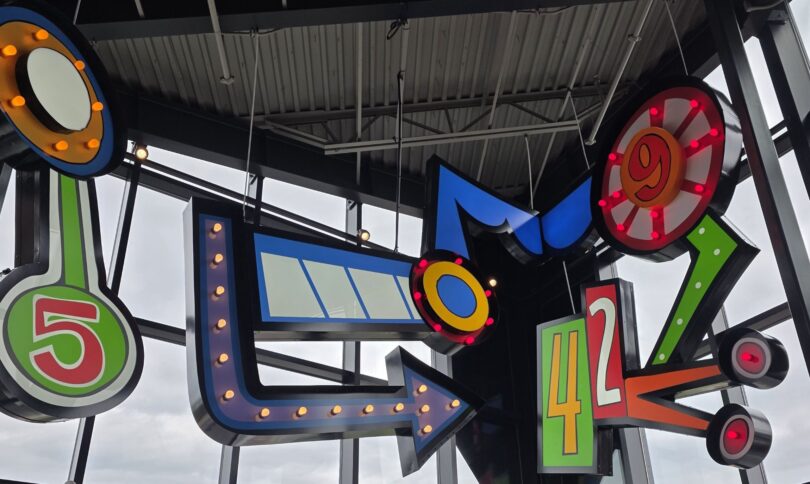
Lewiston, Maine, U.S.A. – Approaching the Maine Museum of Innovation, Learning and Labor, the first thing to notice is its one-of-a-kind architecture.
Massive, beautiful, and inviting, its unique scale draws you in, while the stunning art sculptures visible behind the glass panes instantly catch your eye.
Listen to the author read this article:
Executive Director Rachel Ferrante said the museum, which recently opened in its new space, has been well-received by the community.
“It’s been really positive,” Ferrante said, adding that the museum is generating “great buzz.”
I began my visit to the Maine MILL on the second floor, which features artwork and sculptures centered on identity and culture. These artists powerfully expressed their heritage using diverse materials like brick, clay, and sand.

Nearby, a deeply moving exhibit inside the Memorial Room honors those who lost their lives in the 2023 Lewiston mass shootings. It displays carved pumpkins bearing words like “Love,” “Hopeful,” and “Lewiston Strong.”
This emotional tribute reminded me of the vital importance of community support and the fact that we are truly stronger together.


A sign dedicating the Memorial Room at left and a close up the re-created carved pumpkins at right. (Carlos Fra-Nero/YJI)
The exhibit remembering the mass shootings will be changed each year, Ferrante said.
The museum, which collected artifacts left at the sites of the shootings, continues to accept new material, Ferrante said.
Tour guide Justin Millet provided historical context throughout the museum. He highlighted the diverse identities that shape Maine, including Indigenous and immigrant populations.

Millet explored what brought these groups to the state as well as their cultural traditions and sports history in Maine. Millet also mentioned the history of cotton and textile manufacturing, which included the historical exploitation of child labor in the mills.
Also, Millet explained the cultural divide between the twin cities of Lewiston and Auburn, separated by the Androscoggin River, with Lewiston historically known as the French side and Auburn as the English side.
The tour also touched on social issues, addressing the history of white supremacy in Maine, its ongoing impact on newcomers to the state and how targeted communities are actively resisting hate through community and fighting back.
The Maine Mill is far more than a museum. It is a living historical site that captures the essence of Maine through times of challenge, heartbreak, and resilience.

Programs serving youth and adults, said Ferrante, help keep the museum vibrant.
It serves as a community place, showing how individuals – whether native to the state or newcomers from other parts of the world – have shaped Maine through their unique traditions and ideas.
The Maine MILL is an inclusive space for everyone to learn how our state is evolving into a warmer, more welcoming place for all. I highly encourage everyone to visit.
It is an amazing, beautiful and symbolic time capsule that teaches essential lessons about our shared history.
Carlos Fra-Nero is a Reporter with Youth Journalism International.