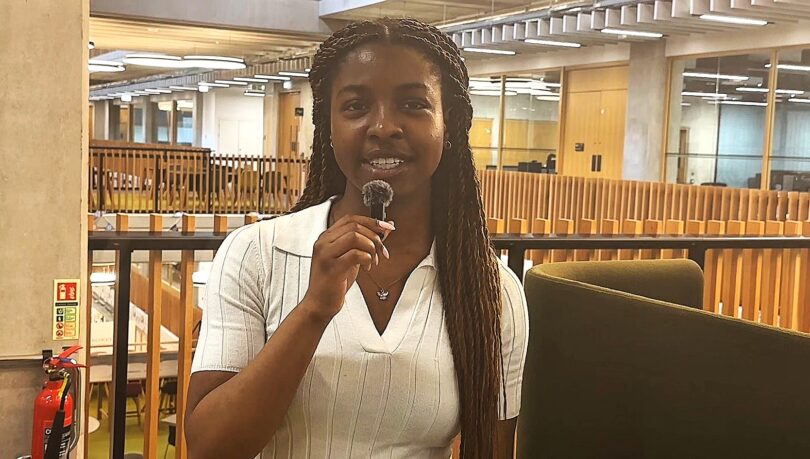
LONDON – I always knew I wanted to do an apprenticeship. The idea of getting an education while learning on the job and getting paid for it felt like a no brainer.
Listen to the author read this article:
Still, coming from a Nigerian household, university was always presented as the default option. Watching my sister celebrate her graduation, I imagined myself doing the same one day, walking across the stage, shaking a lecturer’s hand, wearing my gown and throwing my hat in the air like they do in High School Musical.
My journalism apprenticeship is less glamorous in reality, but just as optimistic.
There are downsides. I can’t help but feel like I’m missing out on university life at times. I visit friends at university throughout the year, but it’s different from actually being there. Sitting in lectures, joining societies, learning how to meal prep without my mum’s cooking nearby.
Apprenticeships are often talked about as an alternative to university, but what people forget is that they are the first real job for many young people.
Working full-time, especially in London, comes with its own challenges. The dark weather, rainy days, cramped Underground journeys and hour-long commutes can take a toll on your mental and physical wellbeing.
Finding a work-life balance is difficult. I’m not a gym girl, but even I’ve noticed how working life can quickly become a cycle of work, home and maybe the gym if you have the energy.
There’s also imposter syndrome. Being one of the youngest in the newsroom can feel intimidating, and sometimes you have to remind yourself of the work you put in to get there, and that even the most established editors started somewhere.
Despite this, I feel an immense sense of gratitude. For anyone who believes in manifestation, my apprenticeship feels exactly like that. I set my mind on securing one throughout my A levels.
Journalism has been a passion of mine since I was a child, and being able to learn it hands on feels like a privilege.
Money is another part of this conversation that often feels taboo in Britain, but it shouldn’t be.
I watch my university friends worry about finding well paid jobs after graduation, a reality many young people are facing. Even on an entry-level salary, I try to budget carefully, saving at least half of my income in the hope of one day buying a house or alternatively traveling around the world.
That kind of financial awareness comes early when you enter full-time work straight from school.
Getting used to a 40-hour work week is not easy, but being in a field you love makes a difference. Before landing my apprenticeship, I faced countless rejection emails and spent time working in retail while hoping one day I’d secure a role.
The application process is competitive, and those “no’s” can be discouraging.
The government says it wants to invest in more apprenticeships, which is positive, but they also need to listen to current apprentices. Young people deserve fair, livable wages and the option to pursue a career they love without taking on a lifetime of debt.
Apprenticeships are a powerful opportunity, especially in the creative industries where hands-on learning matters. We need more of them, and even more support for the young people already doing the work.
My advice for future apprentices is:
- Try your best every day, even when it feels overwhelming or unrewarded.
- Build yourself up as much as your CV, because confidence and resilience matter just as much as experience.
- Give yourself grace, especially in environments where you are still learning and finding your feet.
Anjola Fashawe is a Senior Correspondent with Youth Journalism International.