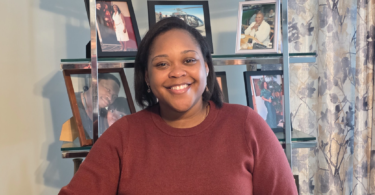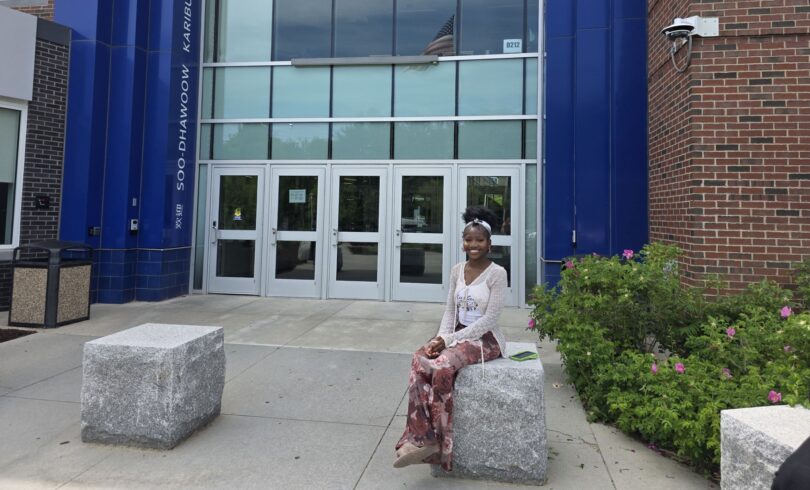
Lewiston, Maine, U.S.A. – Coming from a Tanzanian refugee camp, Noela Uwezo and her family took the long route to their new home in Maine.
America – a place she dreamed of and imagined looked like the fictional movies and shows she’d watched growing up – turned out to be different than what she expected.
Listen to the author read this story:
“I thought … America was going to be like gold everywhere, rich. And then we landed,” Uwezo said, and all she saw was the hotel.

“It was not what I was expecting. The way they would picture America in movies and all that, it was just not how it looked like.”
She no longer has this image of America, Uwezo said, but that’s okay.
Now a U.S. citizen, she’s happy to be in the U.S. Asked what it means to be an American, Uwezo said, “More freedom, more opportunities.”
As for returning to Tanzania – a place she still thinks of as home – Uwezo said, “I just wouldn’t want to go back and live that life.”
Uwezo, 17, was born in Nyarugusu refugee camp in northwestern Tanzania, near the border with Burundi.
She moved to the U.S. with her family as a young girl, about 10 years ago.
Life in the refugee camp
As a child in the refugee camp, Uwezo had to deal with crowded conditions and a lack of food.
It was “a rough life,” she said, although she didn’t realize it at the time.
“I barely remember even eating half the time,” Uwezo said. “Like mostly we would wake up, go play, and then just come back and eat in the night.”
They ate one meal a day, she said, usually porridge.

“But we would get rice once in a while, like every month, once a month,” Uwezo said.
In the camp, she and her six siblings lived in a mud house, Uwezo said.
“When I was there, it was normal to me because I was born there,” she said. “I never really found it weird.”
Today, she is a rising senior at Lewiston High School.
If she had stayed in Tanzania, Uwezo said, “I probably would have been married by now. The pressure there is like more into marriage instead of focusing on your education.”
She still has family living in the refugee camp. While her aunts and uncles don’t support child marriage, her cousins feel a lot “peer pressure” to do it, which caused conflicts.
“Most of my cousins right now, they’re like 13 or 14 and they’re getting married,” said Uwezo. “It’s normalized.”
By the time a girl is 16, according to Uwezo, she may already have a child or be pregnant.
Uwezo said she wants family members who are still in Tanzania to come to the U.S. She tells them that life is better here.

Moving to Maine
Uwezo said she attended a year of pre-K in the refugee camp, but stopped after that.
“I think it was because we were about to move,” she said.
When she got to Maine, she said, she started school in second grade.
It took the family a long time and a lot of work to get their immigration paperwork in and make the move, Uwezo said.
The actual move took three or four months. At first, they had to walk for hours to where they could take a bus. Several bus rides – with stops for a week or more – finally took them to an airport, where they boarded a plane for the U.S.
They arrived in Portland, she said, because immigration officials sent the family to Maine.
It wasn’t until middle school that Uwezo met anyone outside her family who had moved here from Tanzania.
“At first over here I didn’t really feel welcome,” Uwezo said. Elementary school, when she was first learning English, was sometimes difficult.
“I was bullied and just because of my English and all that, how I would act or dress, something like that,” Uwezo said.
She quickly learned to understand English, she said, but speaking took more time.
A couple years after arriving in Portland, the family moved to Lewiston.
“I like the diversity of Lewiston,” she said. “We have many different people.”
Family roots
Uwezo’s father was born in Congo. Her parents met when her mom, a native of Burundi, moved to Congo.
When war broke out, the couple fled Congo and moved into the refugee camp in Tanzania.
They don’t talk about the war, Uwezo said.
Noga Segal is a Junior Reporter with Youth Journalism International.
Read more from the YJI series American Reflections: Young voices on an old promise by clicking on the logo below: